
Go Systems: Advanced protection systems
Impact protection for warehouses, logistics, and industry

At Suministros Arsam, we distribute Go Systems for industrial safety projects where it is necessary to protect racking, loading docks, corridors, entrances, pedestrian areas and critical zones within a plant or warehouse.
Impact absorption technology to ensure safety, operational continuity, and maximum durability in logistics and industrial environments.
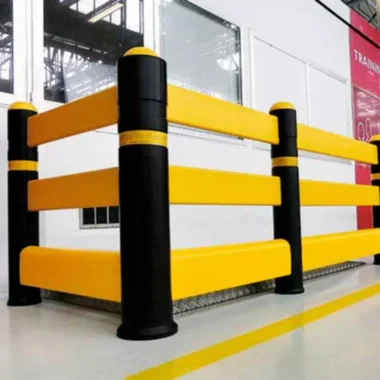
Anti-impact barriers and guardrails
Flexible barriers designed to absorb impacts from forklifts, AGVs, and materials handling machinery. Ideal for aisles, entrances, and areas where people and vehicles coexist. They reduce structural damage and improve operational safety.
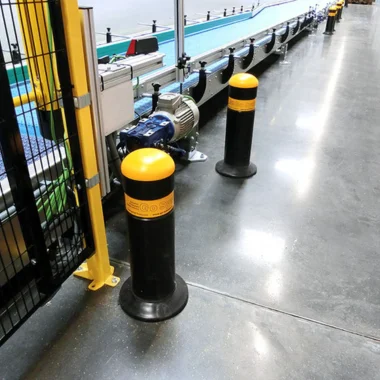
Bollards and protection posts
High-strength solutions to protect corners, columns, industrial doors, and critical points exposed to collisions. Their elastic memory and technical materials prevent permanent deformation even after repeated impacts.
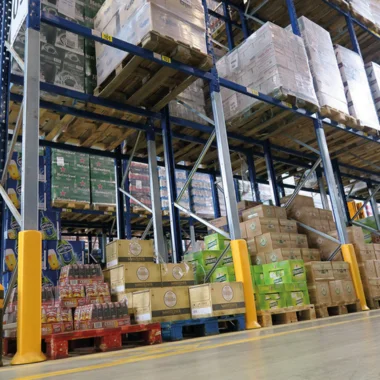
Protections for shelves and racks
Systems designed to protect metal racking, uprights, bases and picking zones from lateral or frontal impacts. They reduce the risk of collapse, ensure safety in warehouses and minimise repair costs.
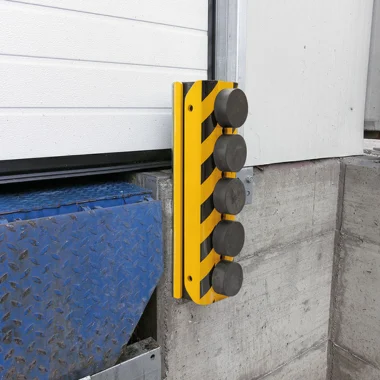
Dock protection
Specific systems for loading and unloading areas, docks, ramps, and high-traffic zones. These include reinforced barriers, buffers, wheel guides, and heavy-duty elements designed for higher-energy impacts. They optimise safety in high-risk logistics areas.
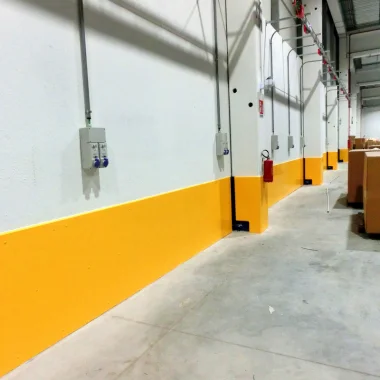
Impact-resistant cladding and panels
Technical panels made from resistant polymers designed to protect walls, cold rooms, columns and critical surfaces. They withstand repeated impacts and offer excellent resistance to chemicals, moisture and extreme conditions.
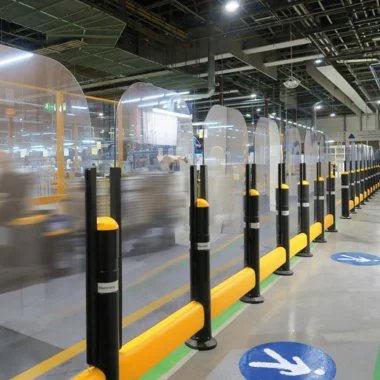
Demarcation of zones and pedestrian safety
Solutions for separating workflows, creating safe corridors and organising internal circulation. They include guardrails, separators and guidance elements that help prevent accidents and improve the organisation of industrial space.
Why choose Go Systems?
About Go Systems
Go Systems is an Italian manufacturer specialising in anti-impact protection systems for industrial environments, warehouses and logistics centres. Its mission is to reduce damage to infrastructure, machinery and goods, preventing production stoppages and improving personnel safety.
Go Systems' solutions are designed to absorb impact, dissipate energy, and regain their shape, even after repeated collisions. Manufactured from cutting-edge technical polymers, they offer exceptional resistance to forklifts, pallet trucks, AGVs, industrial vehicles, and heavy loads.
FAQ – Frequently Asked Questions about Go Systems
What distinguishes Go Systems impact barriers from traditional metal barriers?
Go Systems barriers are made from flexible polymers capable of absorbing impacts and returning to their original shape, which does not happen with metal barriers. They prevent structural damage, reduce energy transmission, and minimise repair costs after a collision.
What types of vehicles can these barriers protect?
They are designed to withstand impacts from forklifts, electric pallet trucks, AGVs, industrial carts, and handling vehicles. Their absorption capacity varies depending on the model and the speed of the impact.
Can they be installed outdoors?
Yes. Many models are designed to resist UV rays, moisture, chemicals, and temperature changes, making them suitable for outdoor areas such as warehouse entrances, loading docks, and loading zones.
Are they compatible with cold rooms or hygienic environments?
Go Systems protections can be installed in food, pharmaceutical or refrigerated environments, as their materials do not corrode and require no specific maintenance.
Can the safeguards be adapted for specific needs?
Yes. Go Systems manufactures bespoke solutions according to the geometry of the area, traffic type, impact energy or the regulatory requirements of each industry.
What industrial problems do they help to avoid?
These reduce damage to shelving, columns, machinery, and floors; prevent collisions with pedestrians; minimise production downtime; and decrease annual costs from impact repairs.