ESD solutions for businesses: protect your equipment and improve production
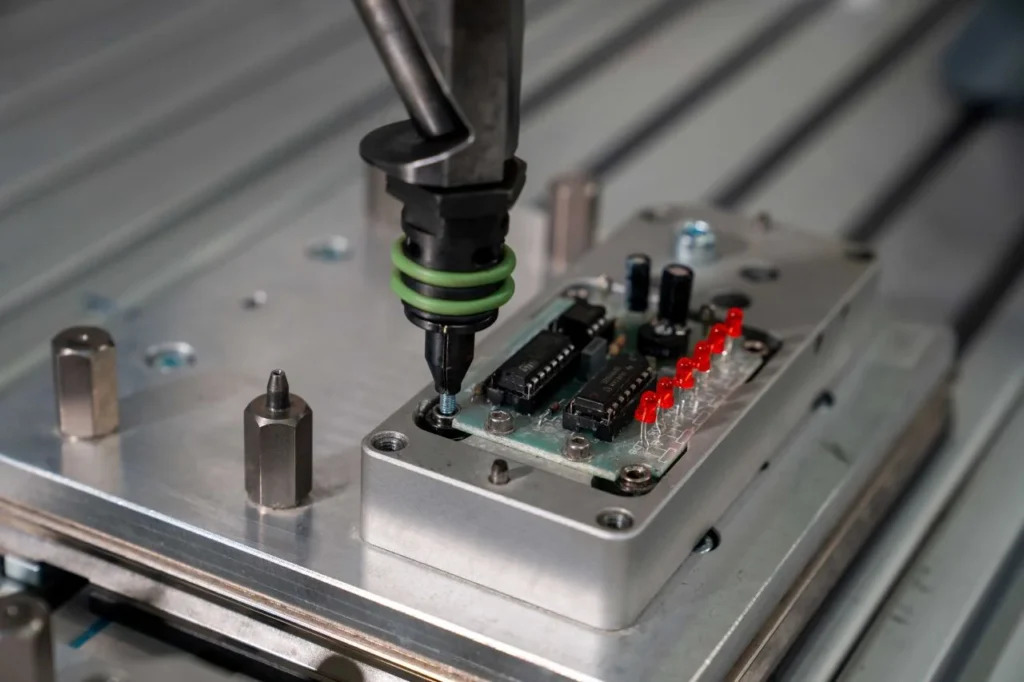
The electrostatic discharge (ESD) is one of the main risk factors in environments where sensitive electronic components are handled. Although its impact is not always immediately visible, the build-up of electrostatic charges can cause functional failures, latent damage and significant financial losses.
In industrial and technology sectors, the implementation of certified electrostatic protection solutions is a key requirement for ensuring product reliability, operational continuity and compliance with international standards.
In this context, Arsam, offers a comprehensive approach based on the supply of specialized ESD products, tailored to the needs of each production environment.
Table of contents
What is electrostatic discharge (ESD) and how does it affect industrial processes?
The ESD (Electrostatic Discharge) is the rapid transfer of electrical charge between two objects with different electrostatic potentials.
Technical impact in industrial environments:
- Damage to semiconductors and integrated circuits
- Intermittent or latent failures in electronic equipment
- Reduced component lifespan
- Increased quality and after-sales costs
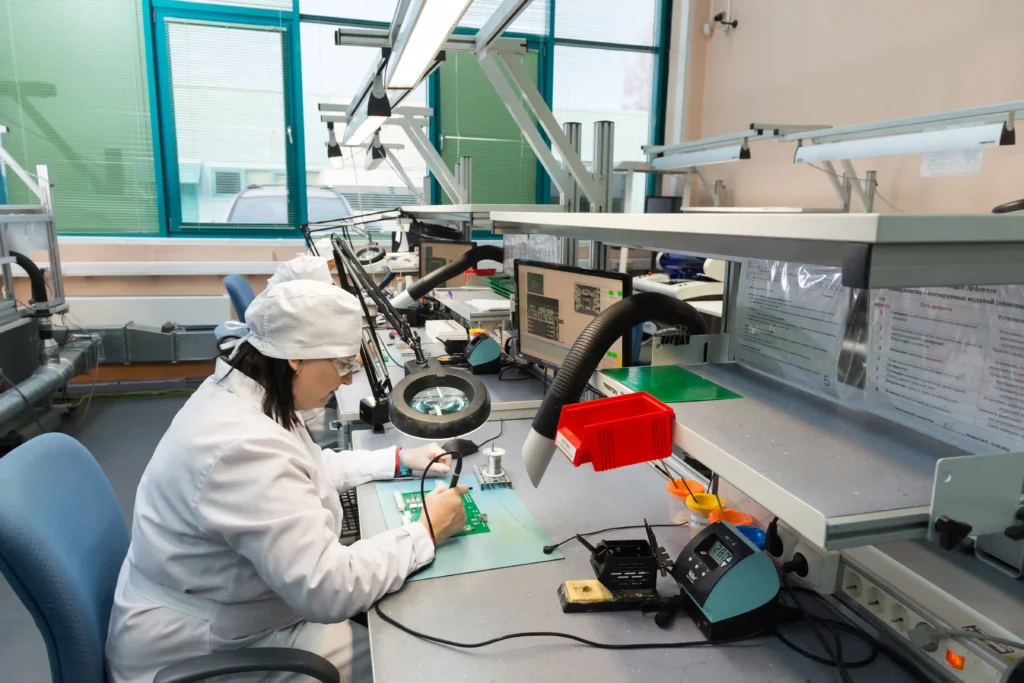
Sectors such as electronics, automotive, aerospace and laboratories rely directly on ESD protection systems to ensure the quality and safety of their processes.
ESD standards and regulations: compliance and technical requirements
Static electricity management is governed by international standards that define the technical requirements for ESD control.
Main standards:
- ANSI/ESD S20.20
- IEC 61340-5-1
These standards establish:
- Electrical resistance limits
- Electrical resistance limits
- Requirements for ESD Protected Areas (EPA)
- Control and audit procedures
Compliance with these standards helps improve process quality and ensure traceability.
Benefits of implementing ESD solutions in industrial companies
Adopting a comprehensive ESD strategy offers clear benefits:
Reduction in operating costs
Minimizes losses caused by defective or damaged products.
Improved product quality
Ensures the integrity of electronic components throughout the entire process.
Regulatory compliance
Facilitates compliance with international standards such as ANSI/ESD or IEC.
Increased productivity
Reduces incidents and improves efficiency on production lines.
Types of ESD products for professional environments
To ensure effective protection, it is essential to have a comprehensive range of ESD products for industrial environments.
ESD packaging and storage
- ESD boxes for safe transport
- Antistatic bags
- ESD protective foams
These elements are essential for preventing damage during storage and logistics.
ESD furniture
- ESD workbenches
- Conductive shelving
- Dissipative tables and surfaces
The ESD furniture creates a controlled environment where static electricity is neutralized safely.
ESD equipment and tools
- ESD mats
- Dissipative tools
- Electrical resistance limits
These tools enable precise work without compromising component safety.
Personal ESD protection (ESD PPE)
- Antistatic wrist straps
- Dissipative footwear
- Conductive clothing
The human factor is key: personnel must be properly equipped to prevent the build-up of static charge.
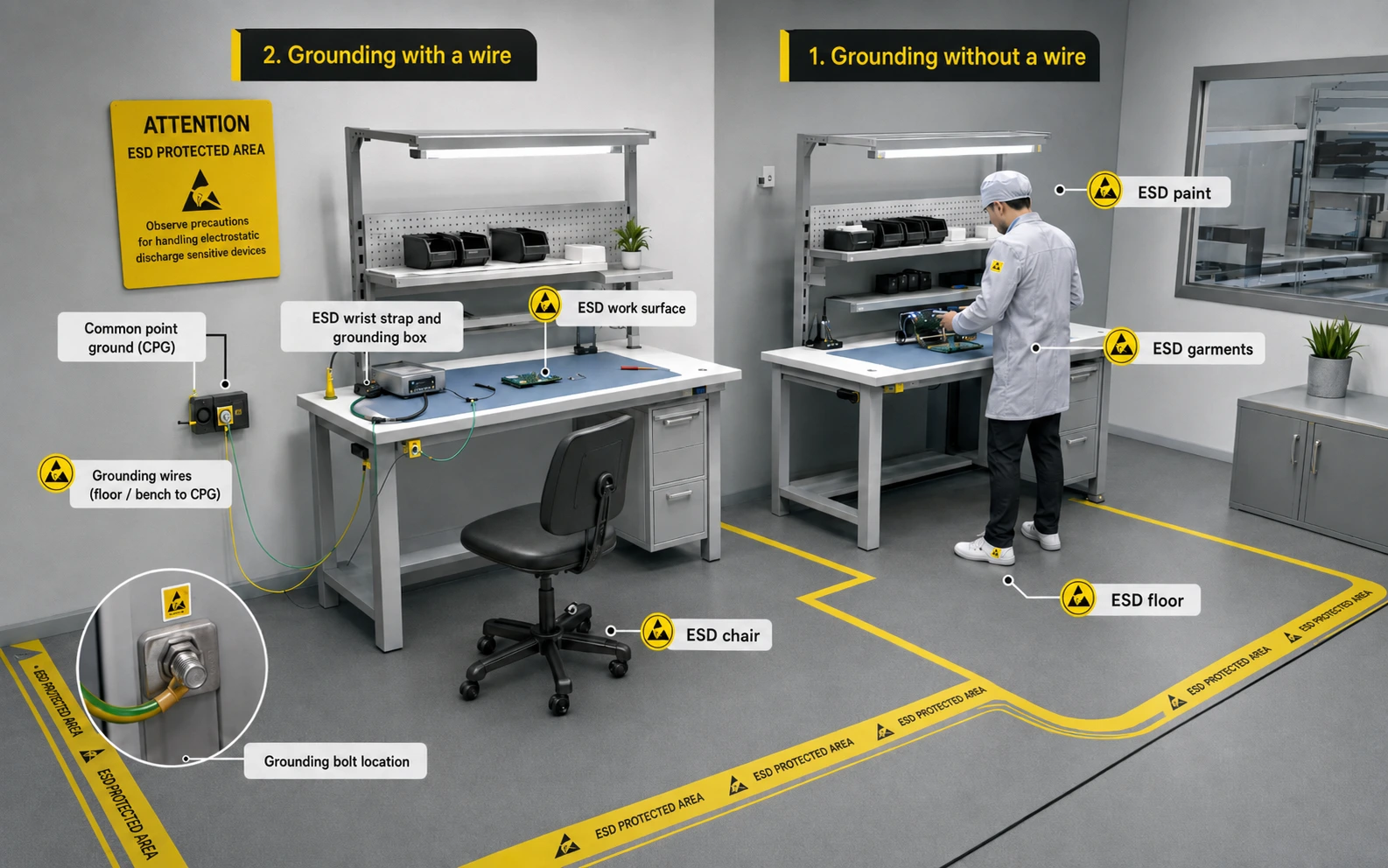
What is an ESD Protected Area (EPA) and how to implement it?
One EPA (Electrostatic Protected Area) is an area specifically designed to control static electricity.
Essential elements of an EPA:
- Grounding systems
- Use of certified materials
- Humidity control
- Staff training
Properly implementing an ESD Protected Area (EPA) significantly reduces the risk of damage and improves process traceability.
Common mistakes in ESD management
Many companies make mistakes that reduce the effectiveness of their systems:
- Implementing partial solutions
- Failing to train staff
- Using uncertified products
- Failing to perform maintenance or audits
Avoiding these mistakes is key to ensuring effective protection.
Why choose ARSAM for ESD products?
In Arsam we have established ourselves as a leading supplier of ESD systems for businesses thanks to:
- Wide range of products
- We work with multiple leading brands
- Personalized technical advice
- Solutions tailored to each sector
Our goal is to help you implement an effective, cost-efficient system aligned with your operational needs.
Use cases: companies that need ESD products
Products with protection against these discharges are essential in:
- Electronics industry
- Assembly centers
- Technical laboratories
- Logistics companies handling sensitive components
Any company that handles electronics should consider ESD protection a basic standard.
Conclusion
ESD protection is not optional in modern industrial environments. Implementing the right solutions makes it possible to reduce costs, improve quality and increase productivity.
Having a specialized supplier such as Arsam ensures access to reliable products, expert advice and solutions tailored to your company.
Take the next step towards safer, more efficient production with professional equipment.
Frequently asked questions about ESD
What does ESD mean?
ESD (Electrostatic Discharge) is the sudden discharge of static electricity between two objects.
What ESD products does a company need?
It depends on the sector, but it typically includes furniture, packaging, tools and personal protective equipment.
How can electrostatic discharges be prevented?
Through grounding systems, the use of ESD materials and staff training.
What is an EPA?
It is a protected area where static electricity is controlled to prevent damage to electronic components.
Is ESD protection mandatory?
In many sectors, it is a requirement for complying with quality standards and international regulations.